Our ancestors saw early spring greens as a welcome sight indeed. Weary of a long monotonous winter diet of stored foods and little or no fresh vegetables, wild spring edibles were much prized.
Even though most of us today don’t rely on wild food for sustenance, it’s still easy to appreciate wild edible plants. Tasty and loaded with nutrients they are, in many instances, superior to store bought veggies.
Generally, we can anticipate wild greens (leaves) as the first to pop up, followed by harvests of flowers, berries and other fruits.
With so many springtime edibles out there, it’s hard for me to choose favorites, so let’s start with one familiar to most of us – the dandelion!
Dandelion (Taraxacum officinale)
Pesky weed or culinary delight? Super nutritious and available everywhere, dandelions are an under-appreciated wild treasure. If you’re only going to learn a few wild edible plants, this should be on your short list.
Why? For starters, the entire plant is edible.
In spring, the leaves are tender and delicious. Eat them raw in salads or cook them as you would any leafy green. If you appreciate a little bitterness in your greens, you’ll like young dandelion leaves.
The little flower buds, tight and round, are my favorite part. Look for them at the base of the dandelion plant. They’re also on the rising flower stems, but best when still tightly closed.
Later in the growing season the leaves can still be eaten, but you’ll probably want to boil them to remove some of the bitterness.
Full-blown, yellow dandelion flowers are also edible. I have found so many people amazed to hear this fact. I like to pick the flowers and eat them while weeding my veggie patch. I usually blow on them to scare out any bugs – not always necessary but makes me feel better!
Another reason to make your acquaintance with this plant – dandelions are super nutritious! They are a very good source of calcium, beta-carotene (the superior, plant source of vitamin A), vitamins C and E and many antioxidants.
HOW TO IDENTIFY
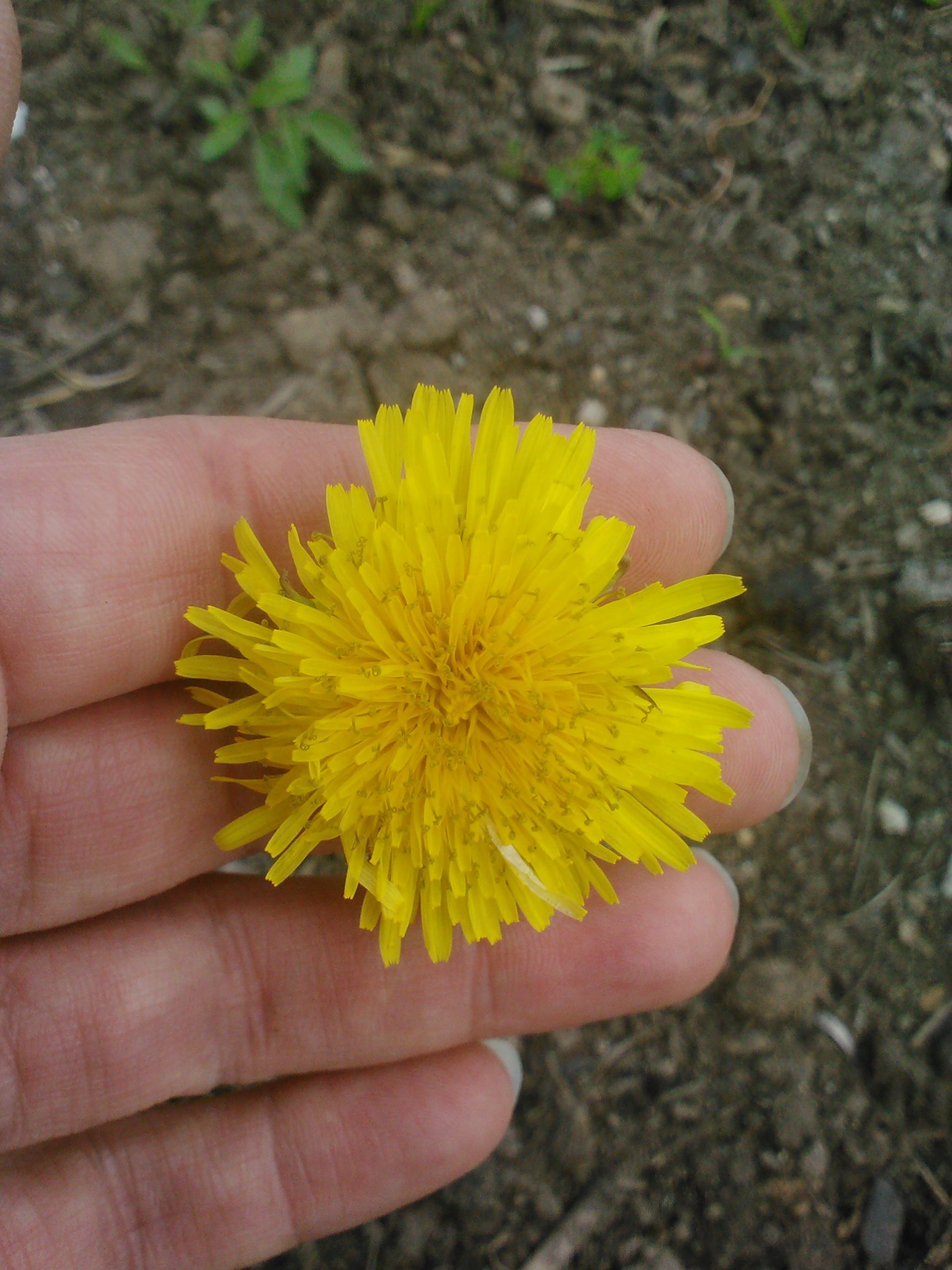
Sun-shiny bright yellow dandelions are probably the most commonly recognized wildflower.
The jagged, pointed teeth on the leaf edges gave rise to the name. Dandelion comes from the French “dent de lion” or “teeth of the lion”. The leaves are in a basal rosette, up to 10″ long, shallow to deeply toothed. The teeth usually point backwards. Smooth, hollow unbranched, leafless stalk, milky sap when broken. One yellow flower per stalk, bloom time is April–May. Seed head is familiar puffball. Long taproot.
CAUTIONS
As familiar as they are to most of us, dandelions do have several “look-alikes” that can result in mistaken identity.
Most of these do not pose any problem although you should always be careful with plant identification.
Cat’s-ear (Hypochaeris spp.) and hawkweed (Hieracium spp.) have dandelion-like flowers, and chicory (Cichorium intybus) and wild lettuce (Lactuca spp.) have similar toothy leaves.
One look-alike that should be avoided is coltsfoot (Tussilago farfara). With a flower similar enough to be confused with dandelion, coltsfoot may have some toxic properties. Even though it has been used medicinally for centuries, coltsfoot is no longer considered harmless, and it may cause liver damage. So make sure you positively identify your dandelions.
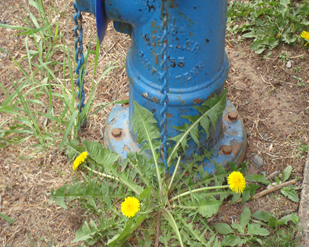
And, as I always remind folks, be careful to forage from “clean” places, in order to avoid pesticides, auto exhaust, and other undesirable contaminants.
Be careful of location!
Common Violets (Viola species)
Roses are red, violets are blue… and they are amazing!
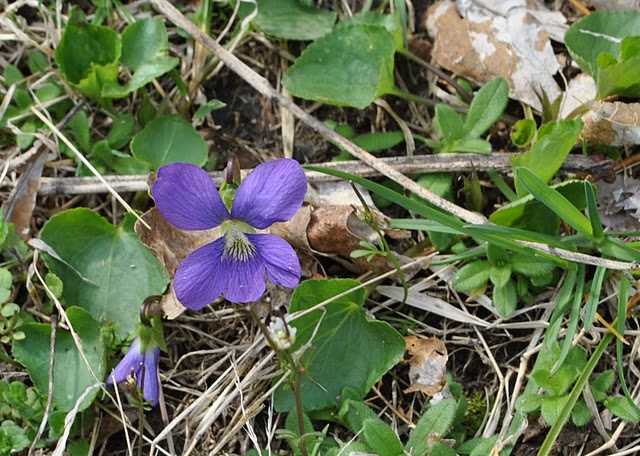
You may be lucky enough to have violets punctuate your lawn in the spring. If so, don’t hesitate to nibble on a few of these little lovelies. Both the leaves and flowers are edible and so good for you, providing hefty doses of vitamins A and C.
Eating the flowers provides a special benefit. Violet flowers are rich in something called rutin. This protective bioflavinoid is an antioxidant with potent anti-inflammatory properties. Many countries sell and use rutin supplements to strengthen capillaries and treat hemorrhoids and varicose veins. Recent studies show strong evidence that rutin may prevent blood clots, thereby reducing risk of heart attacks and strokes.
The showy flowers are impressive as a garnish atop a cake. Or use them as a surprise salad ingredient. There’s a whole lot of “wow” in this little flower!
While violet flowers may be a springtime delicacy, the leaves can be enjoyed for months beyond their spring appearance. And unlike dandelion and some other wild greens, violet leaves do not get bitter with age. Enjoy violet leaves brewed into a good tasting tea, or cook up a bunch for a mess of mild cooked greens.
HOW TO IDENTIFY
There are many species of wild violets, and all members of this group can be eaten. One of our more familiar wild flowers, the leaves are heart-shaped with a scalloped border, with each leaf perched on top of a single, thin stem. The flowers are bilaterally symmetrical, with 2 upper petals and 2 side petals; the lower petal is marked with veins and forms a spur. The young leaves are partially curled, and unfurl themselves as they get bigger.
Gather them from your organically grown lawn or any safe, wild place.
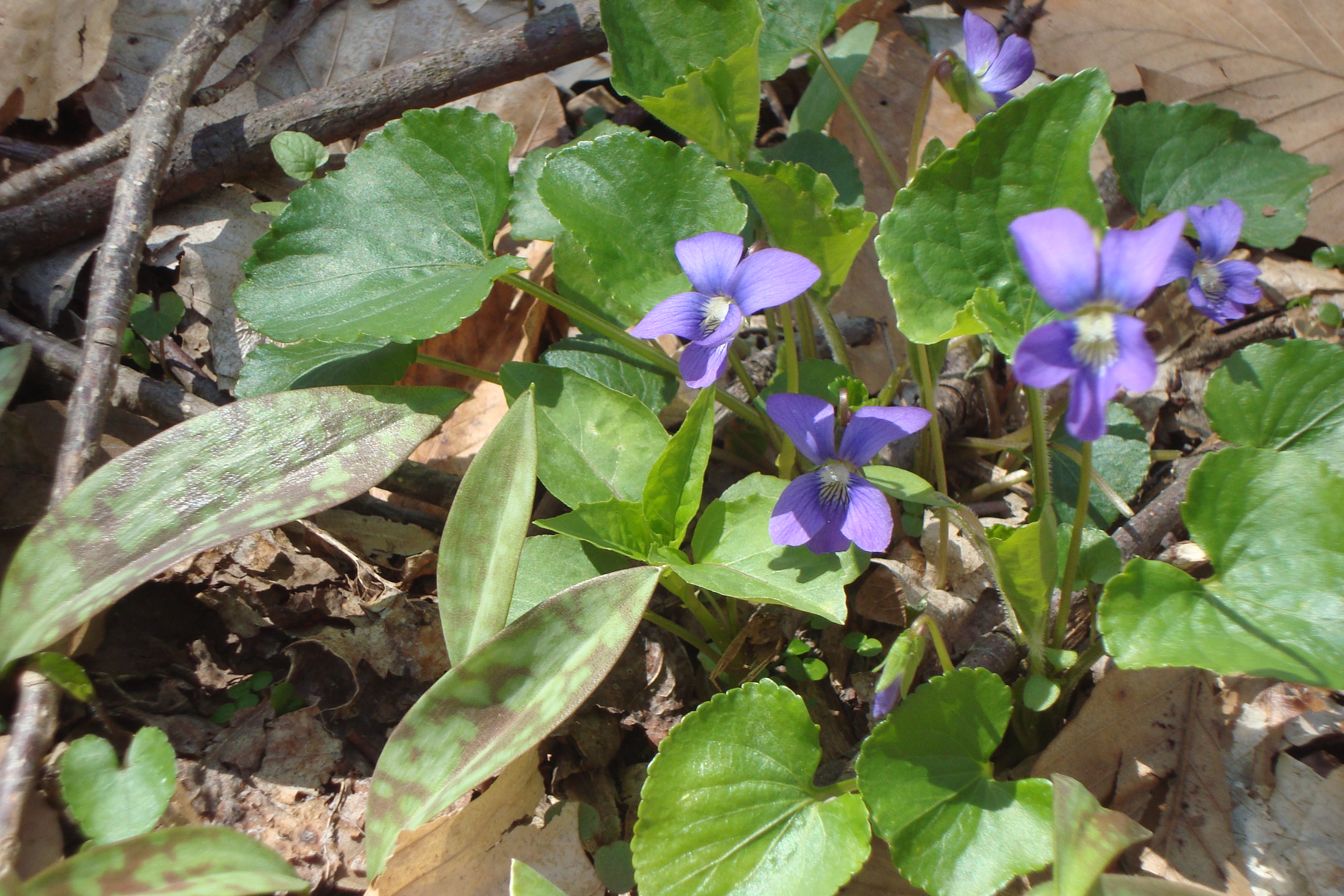
Note the heart-shaped leaf and the scalloped border.
CAUTIONS
Some sources warn about larkspur (Delphinium spp.) and monkshood (Aconitum) as poisonous look-alikes of violets. While I personally don’t see these plants as all that similar to violets, I can see the reason for caution. So, as with ALL wild edibles, I encourage you to really know each plant before you put it in your mouth.
Familiarize yourself with wild violets when they are in bloom; waiting until they flower makes it easier to know this plant and make a positive ID.
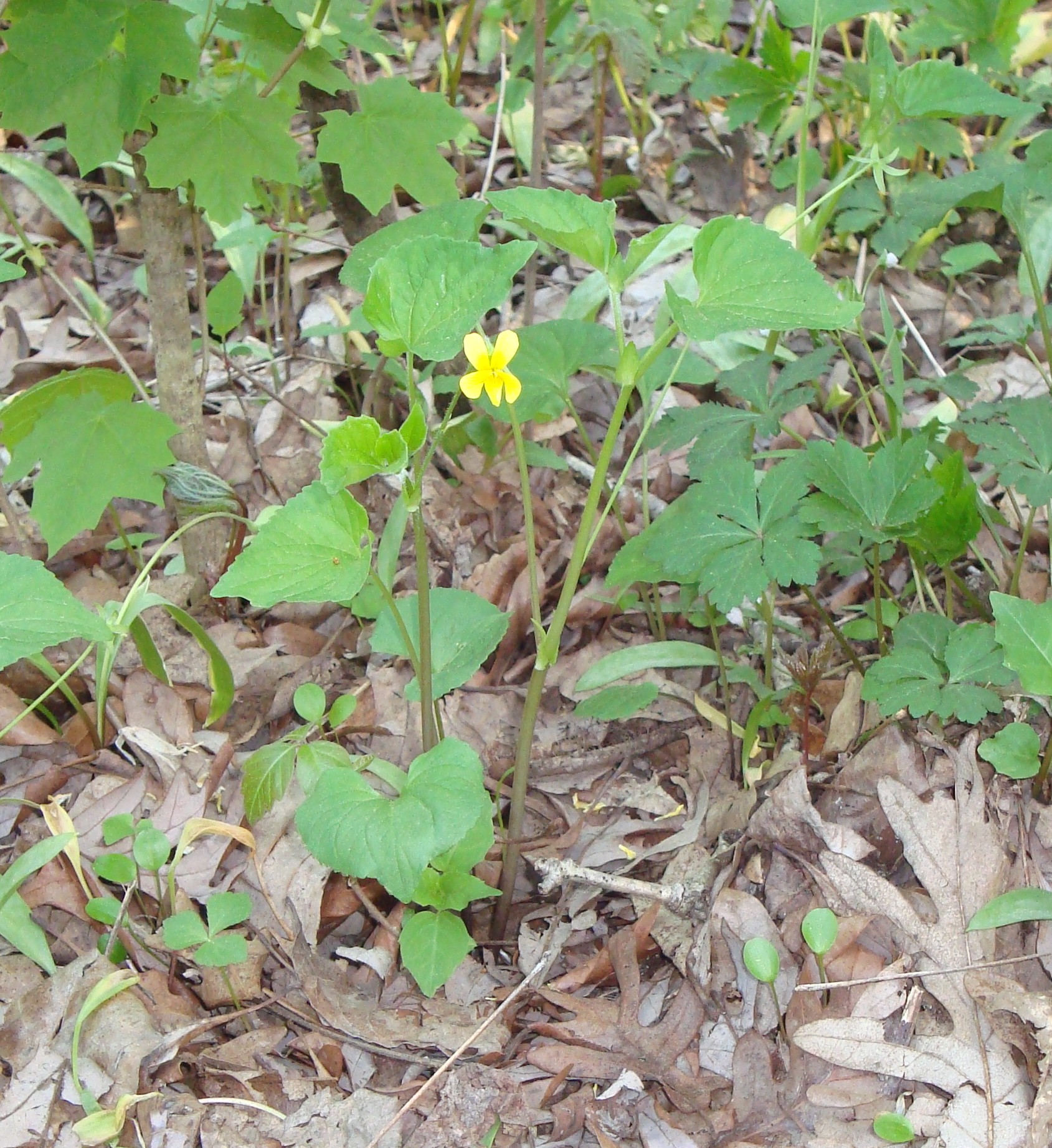
Yellow violet
Ramps (Allium tricoccum)
A real springtime indulgence, ramps are available only during a small window of time.
Also known as wild leeks, ramps are the best wild onion. In New Jersey, this seasonal delicacy appears in late March through the end of May. After this brief window of opportunity, ramp leaves turn yellow and melt away into the forest floor – so remember the spot and come back next year!
The underground bulbs are delicious, but over-harvesting of wild leeks is a serious threat to this native plant. In fact, ramps are now an endangered species in parts of Canada and several other parts of the continent, due to excessive picking by wild Allium aficionados. Foragers who supply high-end restaurants with ramps are a specific concern. They have been known to destroy large populations of ramps, and pose a distinct threat to this species.
So please be a responsible forager. When harvesting ramps, pick leaves only, leaving at least one leaf on each plant. Leaving most of the plant intact along with its root allows the plant to regenerate. Pick a leaf here, a leaf there.
Chopped ramp leaves are great in egg dishes or mashed potatoes. Use them wherever you’d use scallions.
And ramps, along with other members of the Allium family including onion, scallions, garlic, leeks and chives, are nutritional good-guys. Whether wild or domesticated, they fight everything from cancer to heart disease to osteoporosis.
HOW TO IDENTIFY
You’ll find ramps growing in moist woodlands. Each plants bears 2 or 3 broad smooth leaves. The leaves and bulb have a distinct onion or garlic smell when bruised or crushed. Ramps have a scallion-like bulb. The lower stalk is white or reddish. Ramps occur in small clusters or if you’re lucky, in great big expanses.
CAUTIONS
Lily of the valley (Convallaria majlis) is a toxic look-alike to ramps. The leaves do look similar enough to cause confusion. To determine if it’s ramps you’ve got, sniff a crushed leaf or any part of the plant – it should smell distinctly of onion-garlic. Also check other identifying factors.

Ramps (left) and Lily of the Valley (right)
Also said to be a look-alike to ramps, poisonous False Hellebore (Veratrum viride) has pleated leaves, unlike the smooth leaves of ramps. False Hellebore doesn’t have the same onion-garlic odor as ramps. Also, the stalk of False Hellebore elongates as the plant grows.
Be careful.
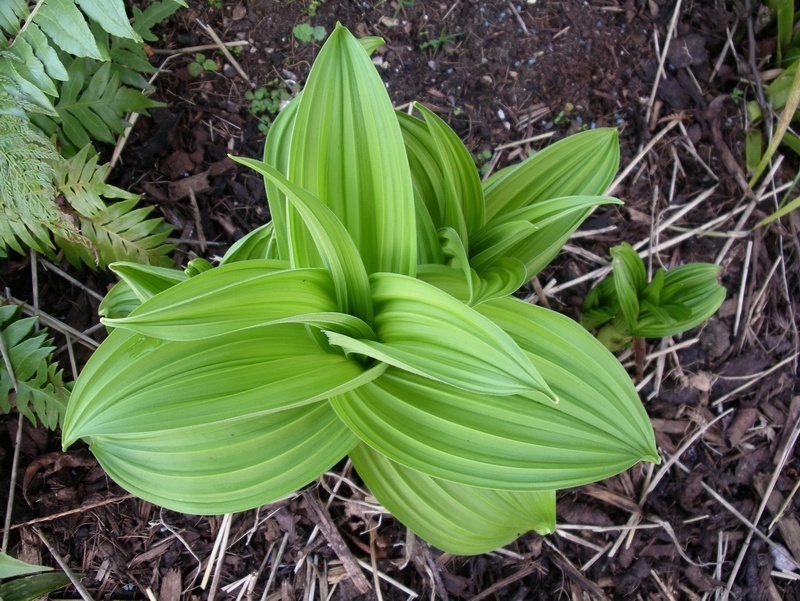
False hellebore
Common Greenbrier (Smilax rotundifolia)
One more “spring only” delight, the new growth of the tough greenbrier vine gives us surprisingly soft stems, baby leaves and tender tendrils and that make for a great trail nibble or a nice salad addition.
Heavily armed with stout thorns in the summer, greenbrier’s soft side surprises many people. When I mention that it’s one of my favorite springtime edibles I often hear people relate their unpleasant encounters with this thorny plant.
But when they pluck the soft growing tips and taste it they are won over by the unique flavor of greenbrier.
The soft edible parts are abundant in May and June.
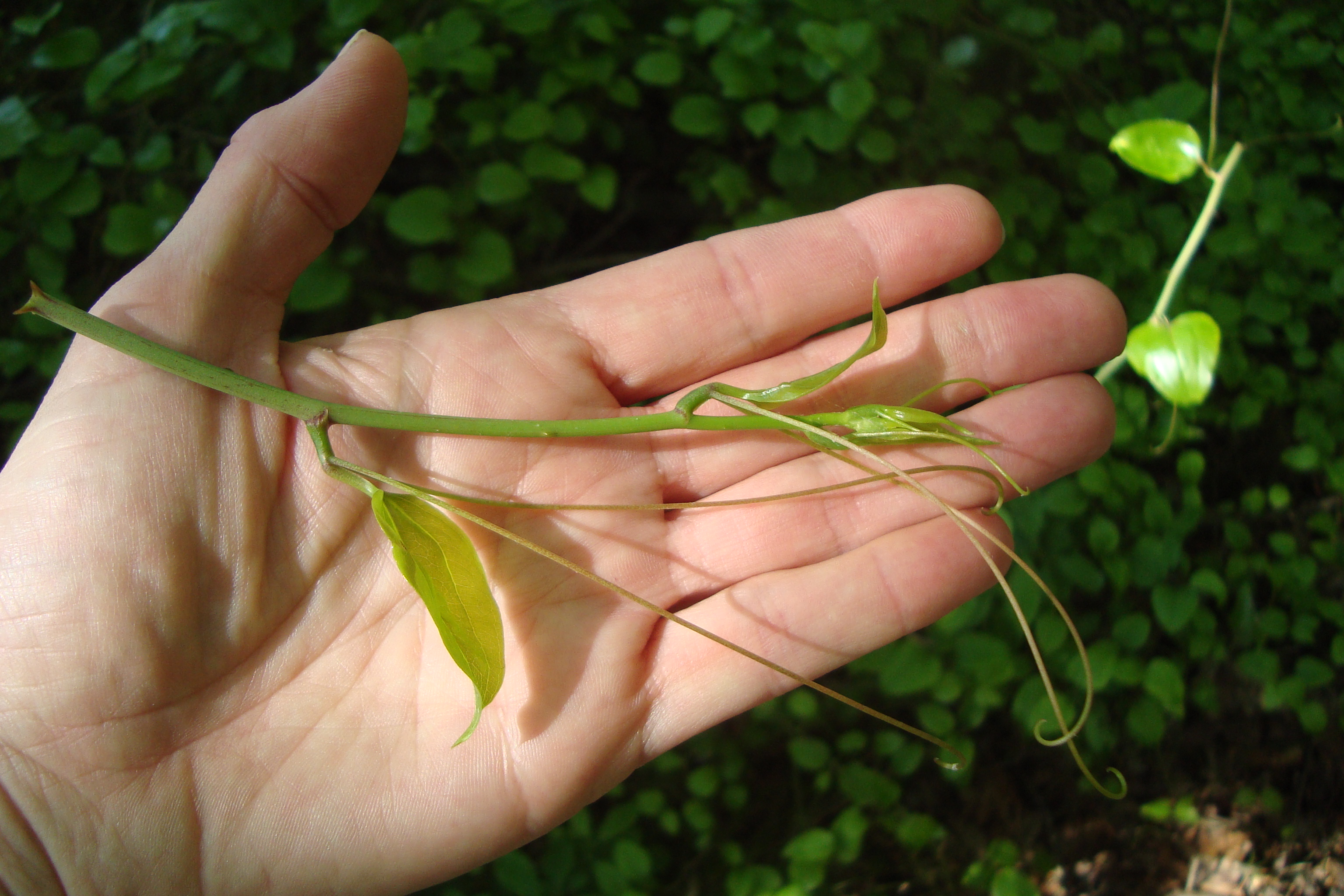
Greenbrier
To savor greenbrier all you have to do is break off anything that seems soft enough to eat, and enjoy. You may even find yourself eating soft young thorns that haven’t hardened yet… I always get a kick out of doing this!
Or you can take a bunch of tips home and cook them up as you would green beans.
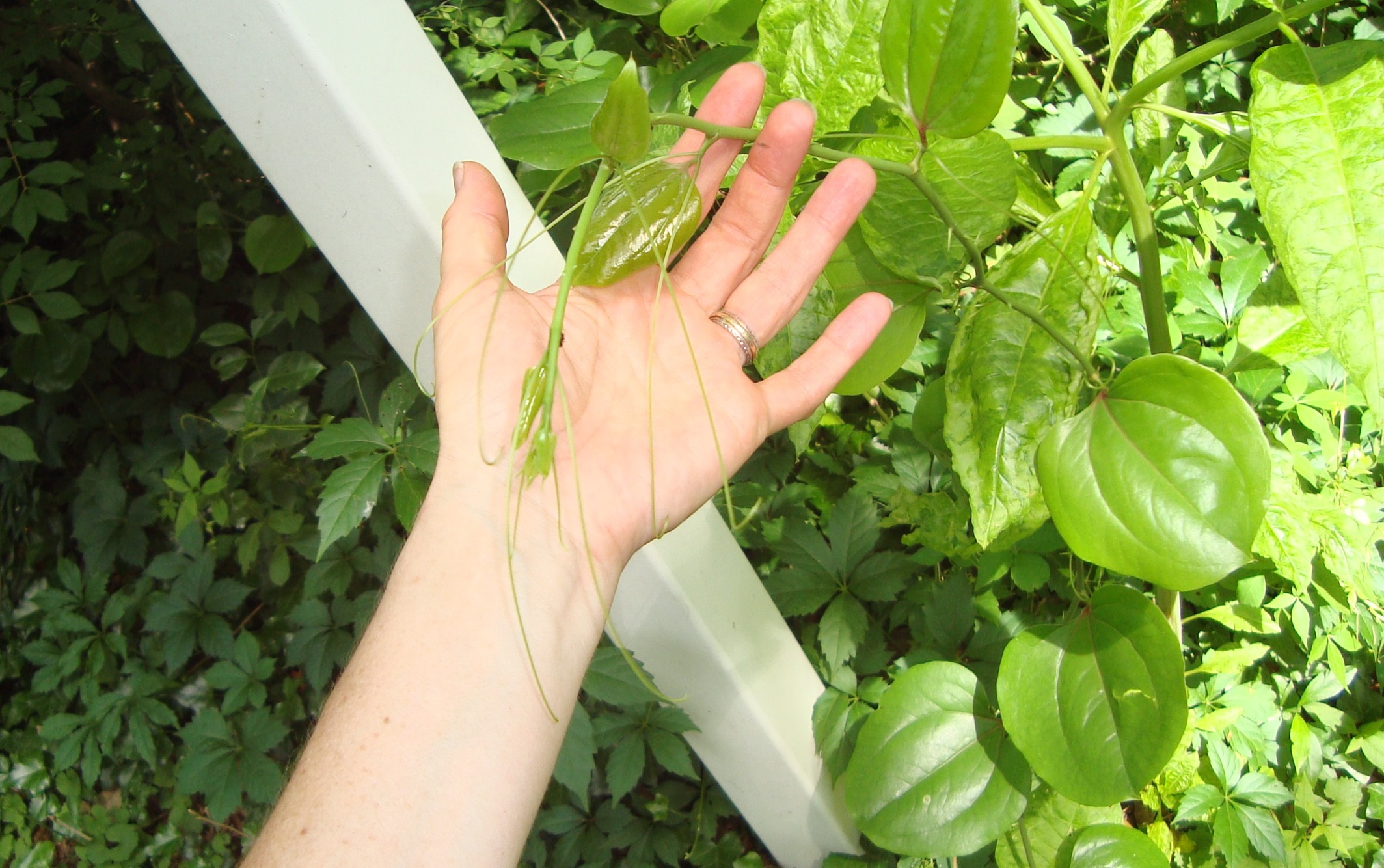
Note heart-shaped leaves with parallel veins.
HOW TO IDENTIFY
You’ll recognize this plant by its thorns, climbing tendrils, and shiny heart-shaped leaves with smooth edges. The leaves have 3-5 parallel veins which radiate out from the base.
Happy foraging!
 wildediblesblog