Winter is a challenging time for foragers, but there’s something uniquely satisfying about finding wild edible plants even on a frosty day. While I might not be willing to remove my mittens in order to pluck a handful of greens, it’s nice knowing that I could bring home the makings of a winter wild salad if I wanted.
You may think that foraging on these coldest of days would yield precious little in the way of edibles. What exactly can you find out there? And with snow blanketing the ground?!
But even before the fresh wild greens of spring have popped, there’s food to be found.
Think of it as a cold weather treasure hunt. While you may need to look a little bit harder, you’ll find that nature still provides bountiful surprises.
………………………………………………………………………………………………………………………………………………………………..
Garlic Mustard (Alliaria petiolata)

Happily photosynthesizing… in February!
Seriously invasive in natural areas throughout the northeast, garlic mustard is a most delicious weed.
The oldest known herb to be used in Europe, garlic mustard was brought over in the 1800s as a favored vegetable. It eventually jumped the garden fence and has since really made itself at home in our woodlands and other moist, shady places.
Too bad that it’s kind of a bully, overwhelming and displacing our native spring wildflowers. It’s such a tasty and nutrition-packed vegetable that I really wish it didn’t have such a bad rep botanically.

Look for kidney-shaped leaves with scalloped edges, and the smell of garlic when crushed.
To identify Garlic Mustard:
Biennial plant with simple, unlobed leaves. First-year basal rosette has round or kidney-shaped leaves with scalloped edges. Can stay green through winter and resume growth in spring. Second year produces a flowering stalk, 2’–3′ tall with pointed, heart-shaped, sharply toothed leaves, alternate on the stem. Small white, 4-petaled flowers. Seedpods are long, thin, and 4-sided with tiny black seeds. White taproot. All parts of the plant smell of garlic when crushed.
The whole plant is edible – all parts, raw or cooked. The leaves are tastier before the flowers form. Come summer, you can eat those flowers.
Garlic mustard seeds have been used as a spice since the days of early European hunter-gatherers. The roots taste like horseradish and can be prepared in a similar fashion.
And the plant is cruciferous. That puts it in the same super-hero family as broccoli, kale and the other protective, cancer-fighting veggies. What a plant.
Add it to your salad for a garlicky hit, or cook it as you would other tender greens, like spinach.
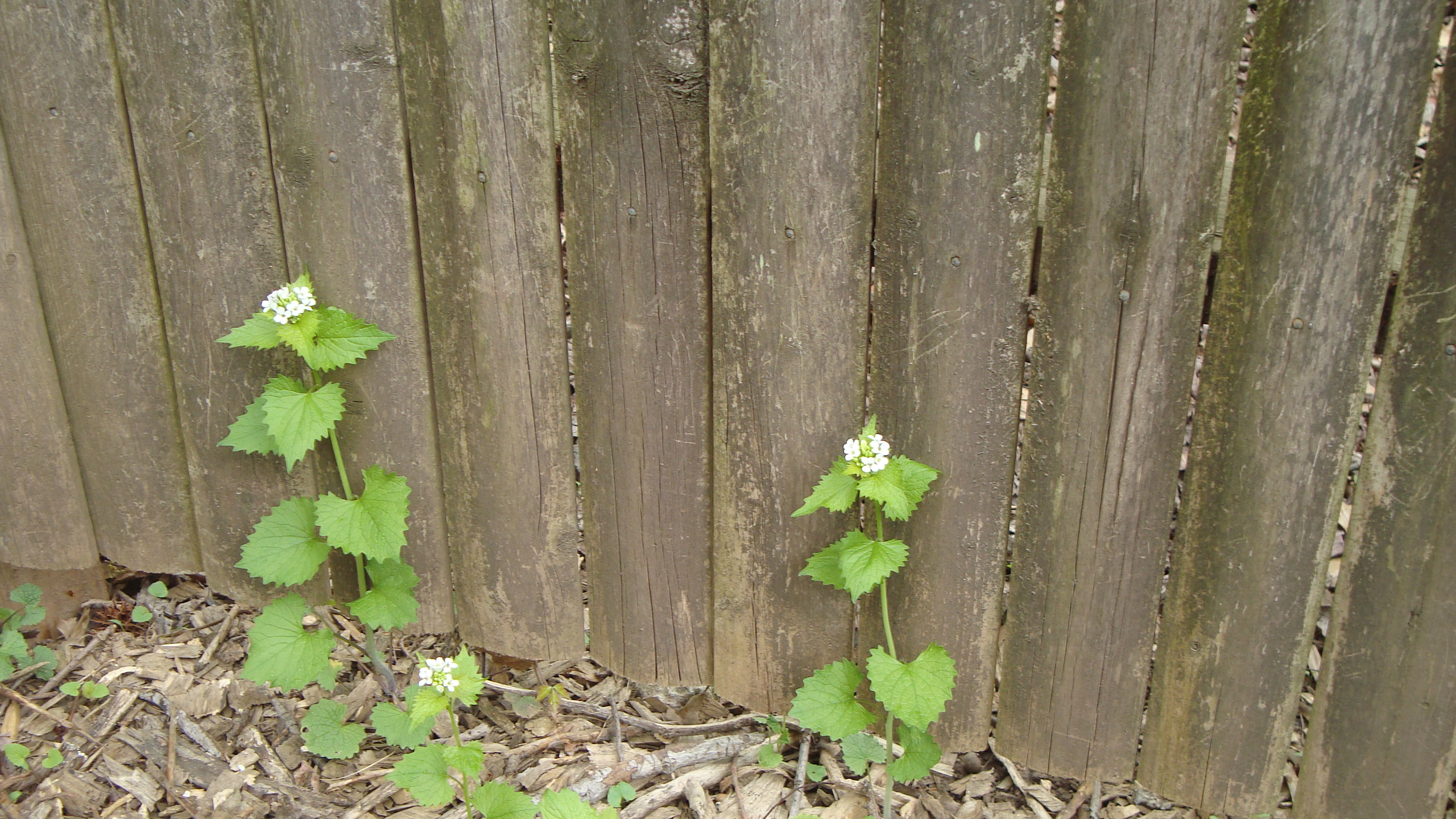
In summer, leaves become triangular and more toothy, and white flowers appear.
………………………………………………………………………………………………………………………………………………………………..
Wild Garlic (Alium vineale)
This plant thrives pretty much throughout the winter.
For positive ID, look for the hollow chive-like leaves, and sniff for a definite garlicky smell. Then snip some and sprinkle as a garnish on soups, or blend into cream cheese (yum!) or mashed potatoes. Use wild garlic anywhere you’d use scallions or chives.
To identify Wild Garlic:
Leaves are long, thin, round, and hollow, up to 18″ long. They usually grow in clumps. Entire plant has strong garlic or onion smell when crushed. Purplish flowers form at the top of a central stem; flowers may be replaced by aerial bulblets. Underground bulbs are white, round to oval, with a papery skin.
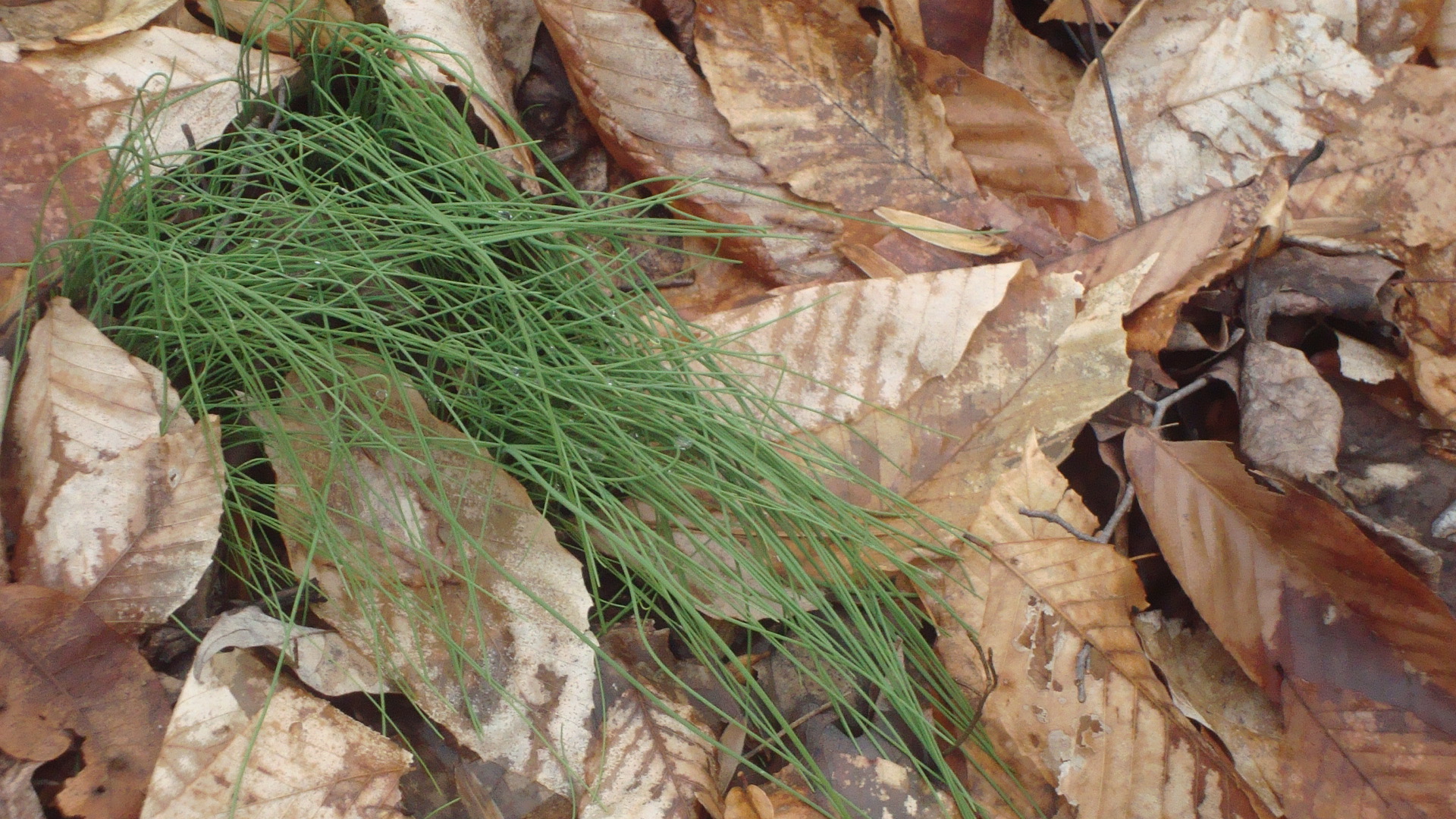
Wild garlic is a member of the Allium family, which hosts a slew of healthful constituents. Included in the list of potential benefits are antibiotic and anti-inflammatory properties, improved heart health and protection against some cancers.
And most of the benefits are present in both raw and cooked form. So enjoy nibbling wild garlic whenever you find it. Garlic breath may be a small price for the payback.
……………………………………………………………………………………………………………………………………………………………..
Wild Strawberry (Fragaria spp.)
Now how about a nice hot cup of strawberry leaf tea – doesn’t that sound inviting?
Wild strawberry leaves make a nice, mild caffeine-free tea. And while it may not taste of the fruits of summer, the brew has its own pleasant character. On your next woods walk, scan the brown leaves of the woodland carpet and you’ll likely discover wild strawberry leaves.
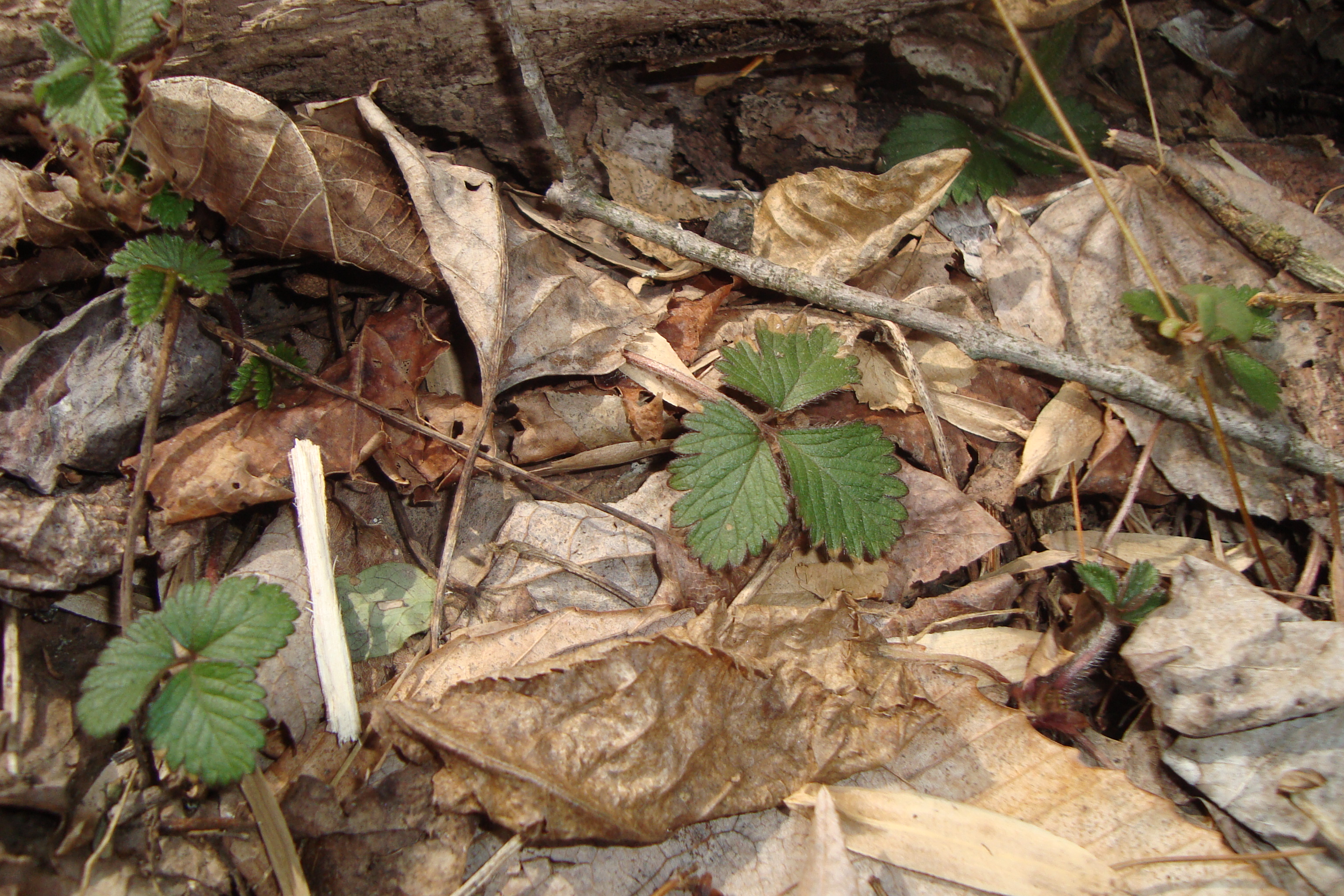
Wild strawberry in winter – move leaves around and you’ll find more hiding below.
Fairly easy to identify with their familiar coarsely-toothed leaflets in groups of three, the leaves look very similar to your garden-variety strawberry. You may even find them peeking through a cover of snow.
To identify Wild Strawberry:
Look for a ground-hugging plant with leaves consisting of 3 leaflets, coarsely toothed. Flowers are white with 5 petals. Fruit are quite small, and red when ripe. Seeds are sunken into surface of the flesh. Plant spreads by runners, which root to form new plants.
Gather up a handful of the fresh leaves, and use 1/4 cupful for each mug of boiling water.
Wild strawberry does have a look-alike. Indian or mock strawberry (Potentilla indica) can be difficult to tell apart from true strawberry without flowers or fruit to help in identification, but not to worry… they both make a pleasant pot of tea.

……………………………………………………………………………………………………………………………………………………….
Dandelion (Taraxacum officinale)
Everybody knows this plant. And even though the flavor of dandelion leaves is milder when young, I’ve tasted some surprisingly acceptable ones in the dead of winter. Nibble on a leaf to check its bitterness quotient, and then take it from there.
Once in a while you’ll even find a flower. But since they’re kind of scarce in winter I like to leave them for others to enjoy their radiating yellow sunshine.
The entire plant is edible. The roots are sometimes roasted and used as a coffee substitute. The jagged, pointed teeth on the leaf edges gave rise to the name. Dandelion comes from the French “dent de lion” or “teeth of the lion”.
To identify Dandelion:
The leaves are in a basal rosette, up to 10″ long, shallow to deeply toothed. The teeth usually point backwards. Smooth, hollow unbranched, leafless stalk, milky sap when broken. One yellow flower per stalk, bloom time is April–May. The seed head is the familiar puffball, and the plant has a long taproot.
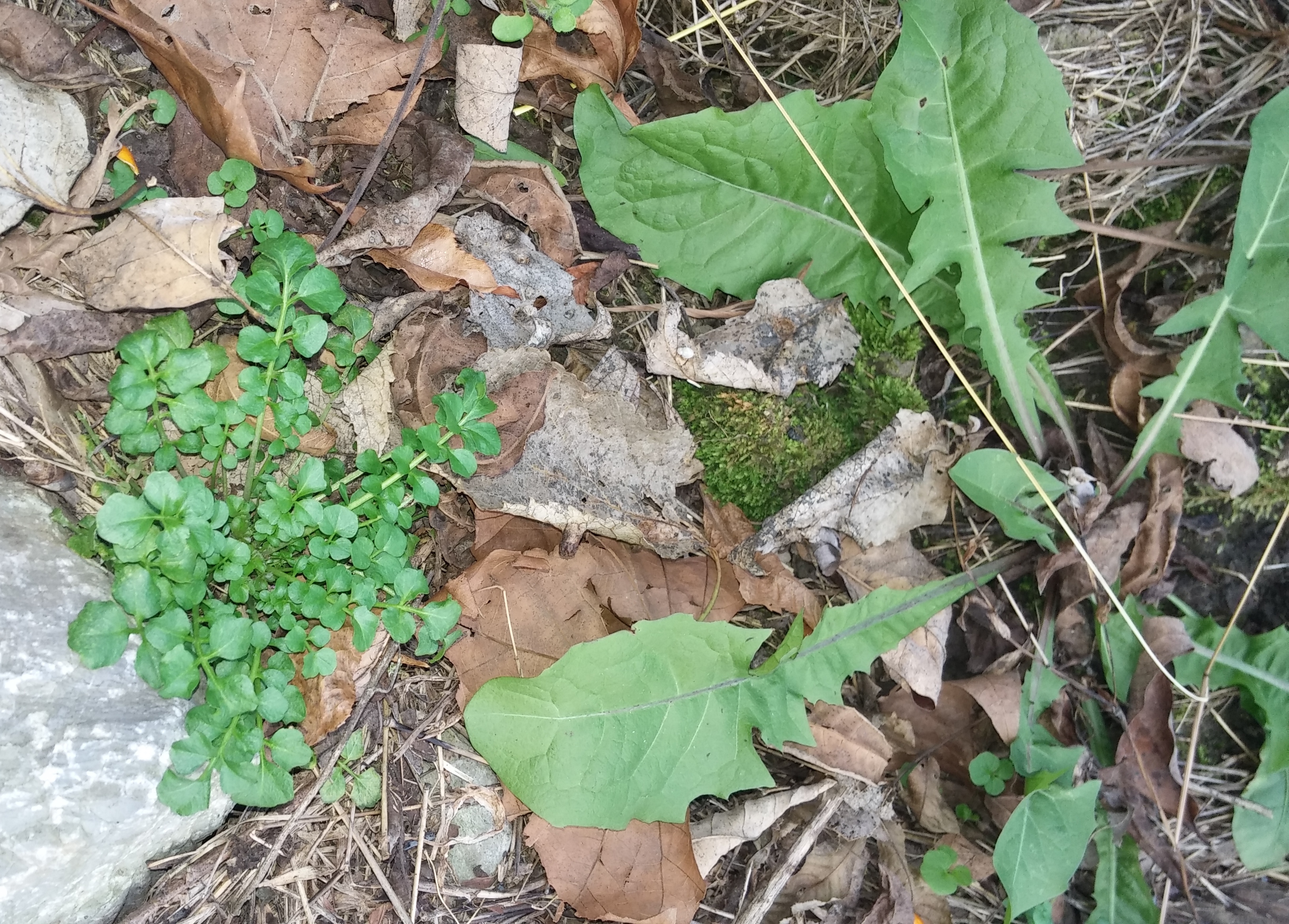
Dandelion, alongside some bittercress (also waiting to be eaten!)
………………………………………………………………………………………………………………………………………..
Hairy Bittercress (Cardamine hirsuta)
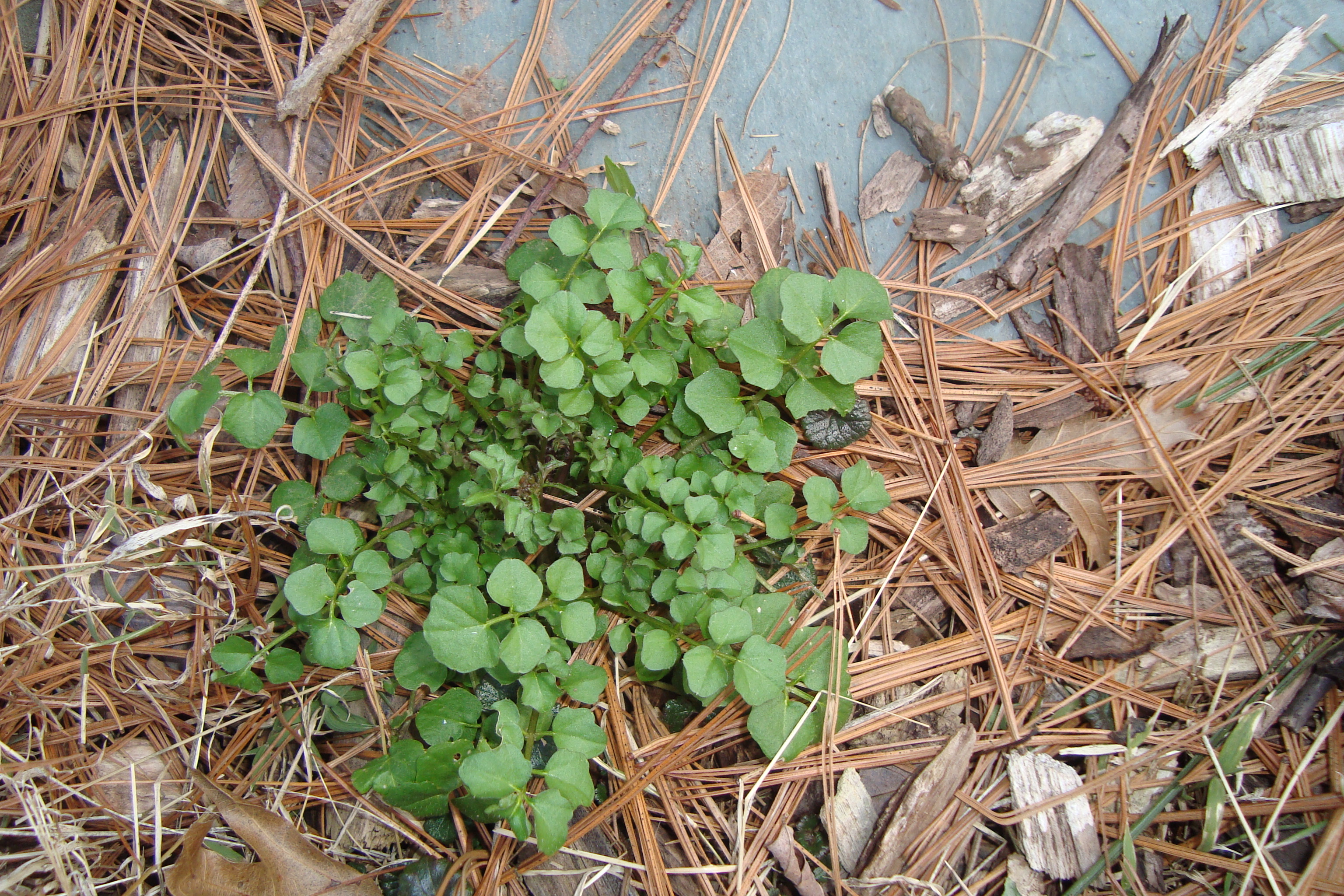
You may know this as the weed plaguing your garden beds.
This invasive “weed” can be found almost anywhere and is a terrific edible. Unfortunately named, hairy bittercress is hardly bitter, and it really isn’t hairy. Its pleasant, slightly peppery flavor is similar to its near relatives, watercress and arugula.
Full of nutrition, it’s another of those health-protective, cruciferous veggies. Pick the stems and leaves and enjoy them as you find them, or take some home to add zip to your dinner salad. The whole above-ground part of this plant is good eating.
To identify Hairy Bittercress:
Look for leaves growing in a dense basal rosette radiating out from a central point. Each stem is a leaf with multiple leaflets arranged in opposite pairs. Leaflets are small and rounded; the terminal leaflet is the largest. Leaves are sparsely hairy. Flower stalk arises from the center of the rosette bearing small clusters of tiny white, 4-petaled flowers that become thin, erect seedpods. When mature, the pods explode at the lightest touch, sending seeds up to 6′ away.
 wildediblesblog