Yaaay!! Spring is now in full swing.
And wild edibles are all over the place.
Everywhere I look I see them.
But then again, I’m used to seeing the natural world in terms of “Can I eat that?”
It’s fun finding the edibles that are coming into their own right about now in NJ and PA: greenbriar tendrils, young lambsquarters, and tender dandelion greens to name a few.
And while some very early spring ephemerals are already past their prime, or even completely gone, other treats are taking their place. It’s kind of sad knowing I’ll have to wait until next spring to enjoy bittercress and ramps again, but I relish black locust blossoms that soon appear.
A season for everything!

Black Locust (Robinia pseudoacacia)
There’s only a small window of time to experience this fragrant gift of spring… and that’s now!
Black locust flowers are the only part of this tree that you can eat. So when you decide to partake, be sure to remove the flowers from the main cluster stem.
To identify Black Locust :
Fragrant white pea-like flowers hang in showy clusters from the tree. Each flower is about 1″ long. The leaves are 7″–18″ long, alternate, and pinnately compound with an odd number of leaflets. The leaflets are oval, and the margins are smooth. Twigs have short, paired, sharp spines, which may be absent in mature trees. The inedible fruit is a thin, flat pod. The bark is brown or gray-brown and deeply furrowed.
Enjoy the flowers raw from the tree, stir a handful into pancake batter, or mix them into a fresh fruit salad.
The flowers taste best when they look best, and haven’t wilted yet.
* * *
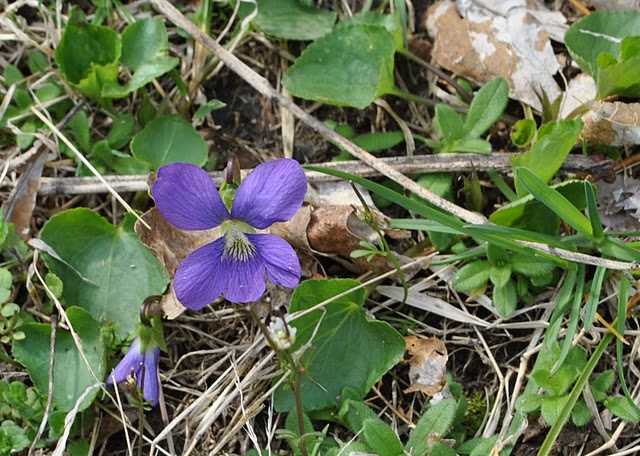
Wild Violets (Viola spp.)
Violet flowers are fun to eat and are rich in rutin, a bioflavonoid that strengthens capillary walls. Their time to shine is mid-April through early May.
But you can still make good use of the foliage. Violet leaves offer a healthy dose of vitamin C, and can be eaten raw in salads or cooked like any leafy green. Or brew up a tasty cup of violet leaf tea from the fresh or dried leaves.
To identify Wild Violets:
The leaves are heart-shaped with a scalloped border, and they sit atop a single, thin stem. The flowers are bilaterally symmetrical, with 2 upper petals and 2 side petals; the lower petal is marked with veins and forms a spur. The young leaves are partially curled, and unfurl themselves as they get bigger.
A word of caution: Some sources warn about larkspur (Delphinium spp.) and monkshood (Aconitum) as poisonous look-alikes of violets. As with ALL wild edibles, you should really know each plant before you put it in your mouth. Familiarize yourself with wild violets when they are in bloom; waiting until they flower makes it easier to get to know this plant and make a positive ID.
* * *
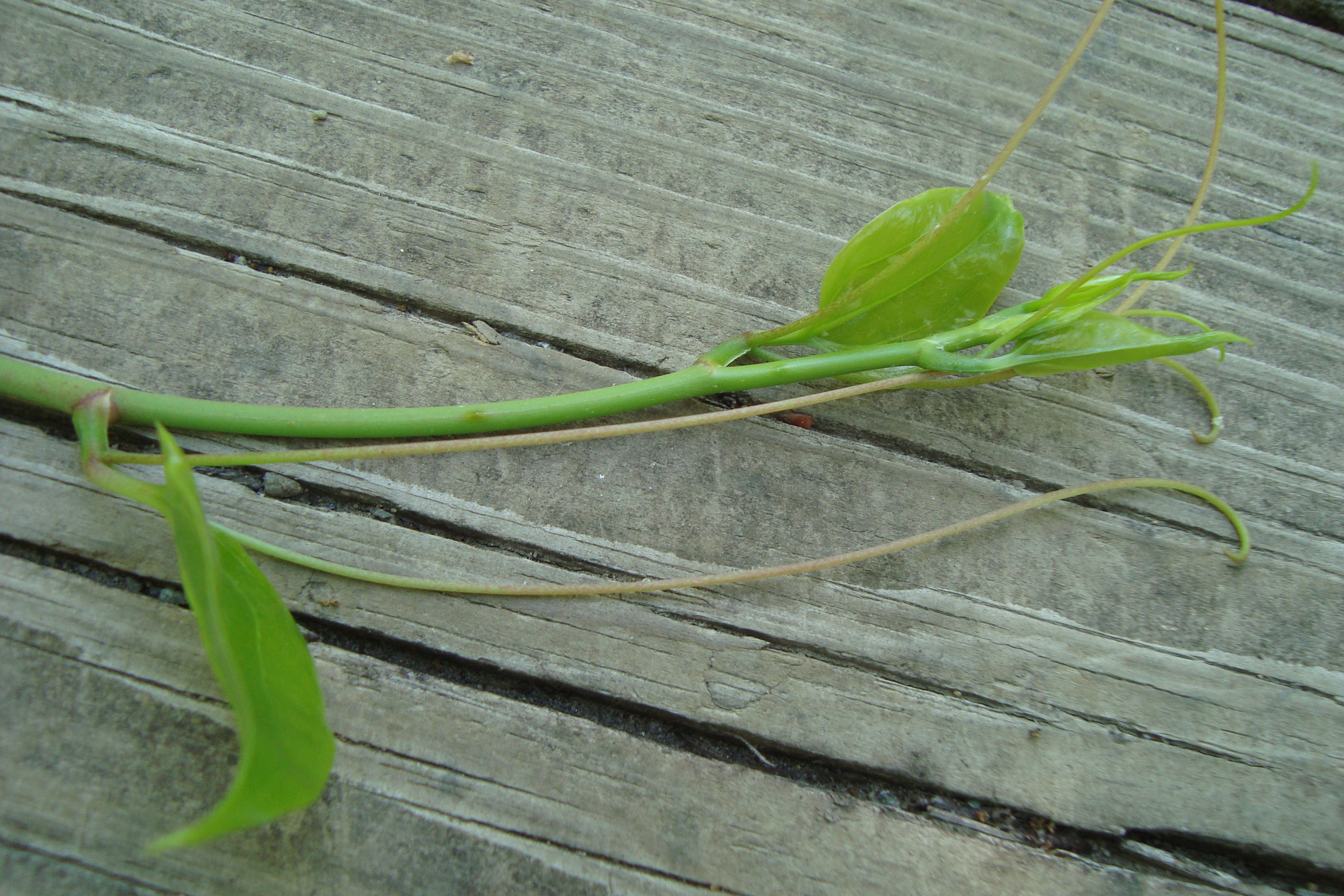
Common Greenbrier (Smilax rotundifolia)
Who would ever guess that this terribly thorny shrub could bear such tender spring growth?
Available in spring and no other time, the beautiful soft tendrils of this plant make a great trail nibble.
At this time of year, the young tips of the vine haven’t hardened off yet and are soft and pliable. Just snap off the ends, and whatever easily breaks off is good to eat.
To identify Common Greenbrier:
The vine has thorns, climbing tendrils, and shiny heart-shaped leaves with smooth edges. The leaves have 3-5 parallel veins which radiate out from the base.
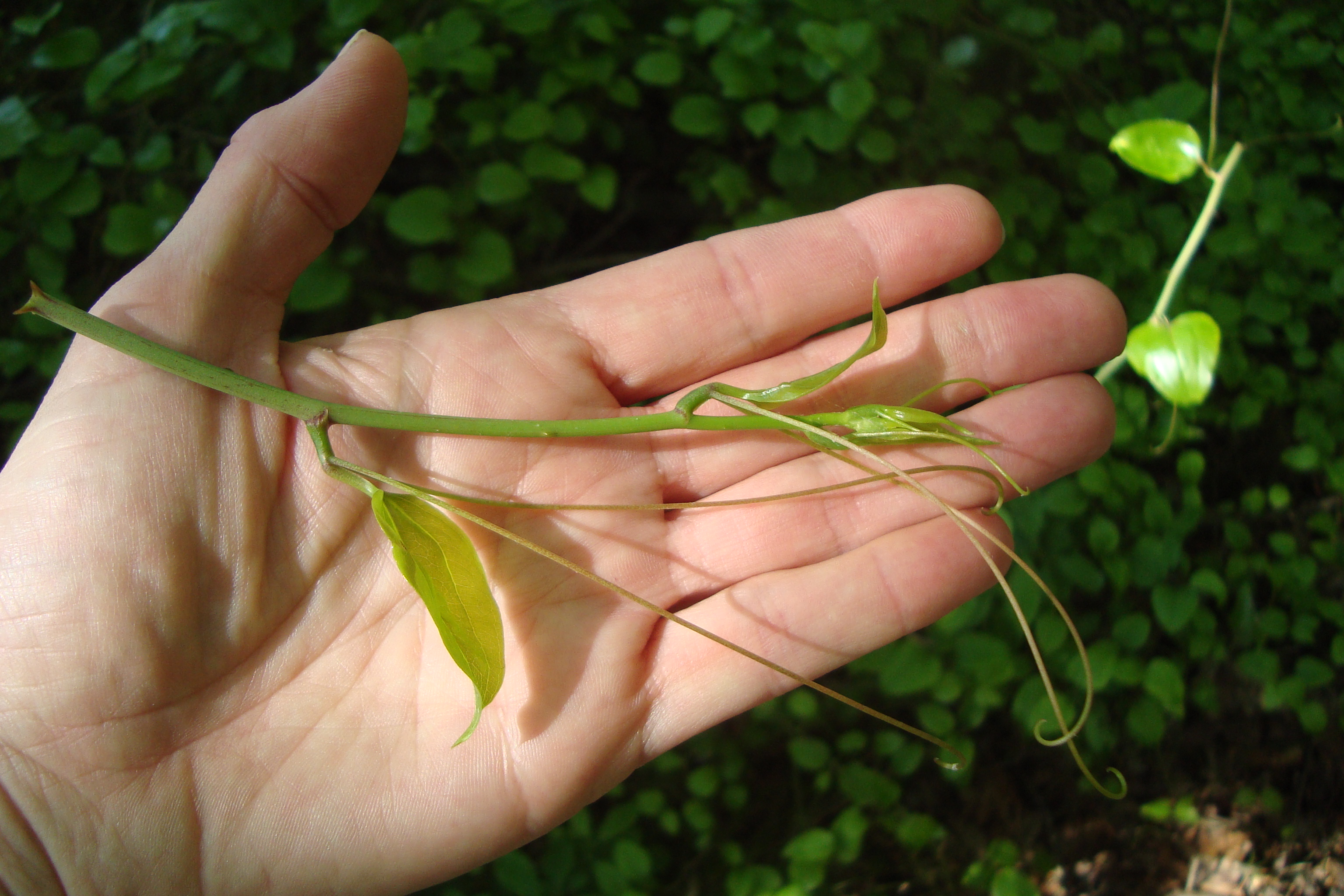
Someone once told me this part of the plant looks like a praying mantis. It does, doesn’t it? I’d much rather eat the greenbrier though!
* * *
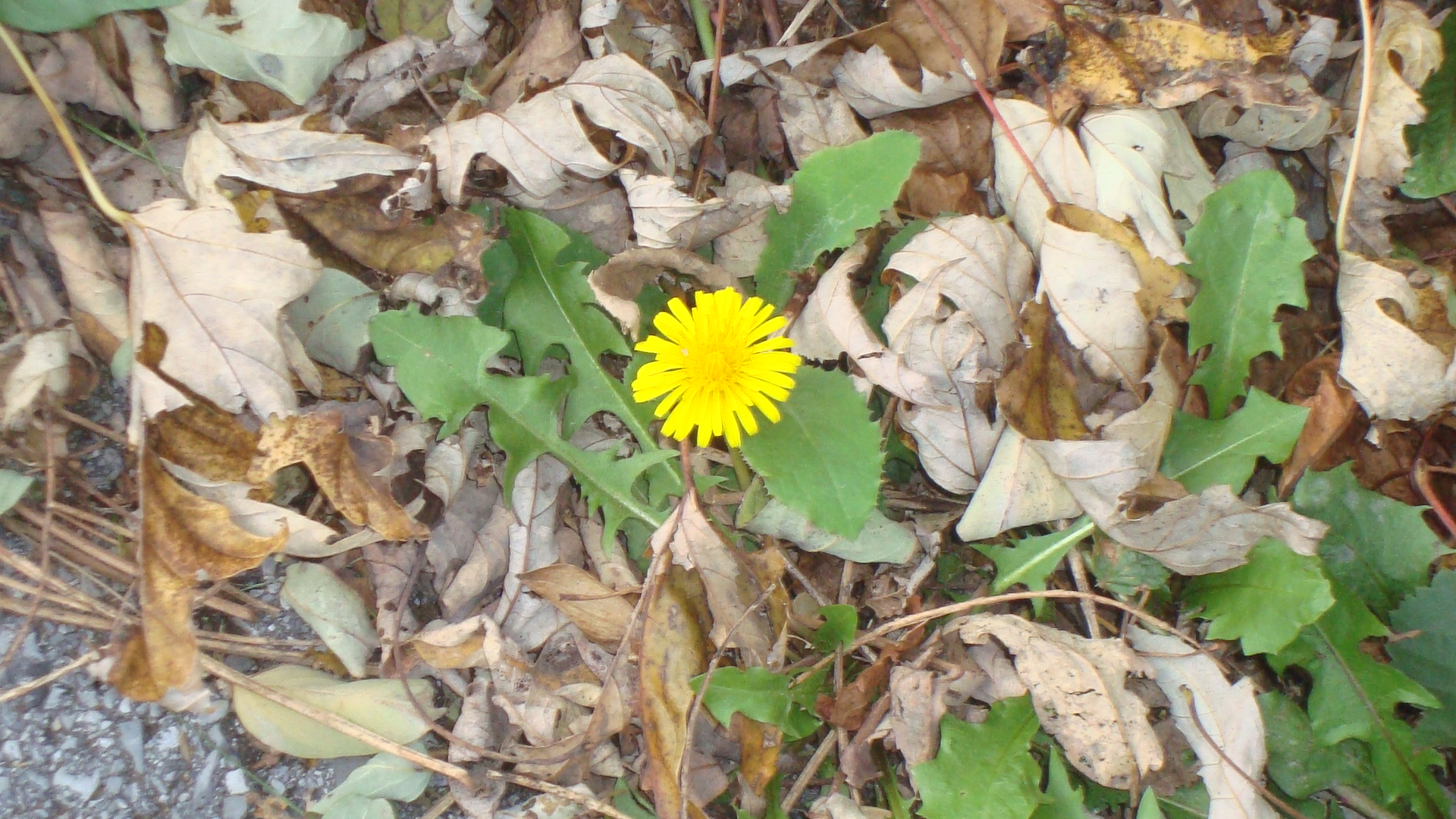
Dandelion (Taraxacum officinale)
Pesky weed or culinary delight? Super nutritious and available everywhere, dandelions are an under-appreciated wild treasure.
The spring leaves are tender and delicious. Eat them raw in salads.
Pick a flower and just eat it! Usually I blow on it first to scare any little bugs from their hiding places.
With older dandelion leaves, you can take a bite first to see how it tastes to you. If the degree of bitterness is beyond your liking, you can boil them first for a milder “mess of greens”.
To identify Dandelion :
The leaves are in a basal rosette, up to 10″ long, shallow to deeply toothed. The teeth usually point backwards. The stalk is leafless, smooth, hollow, and unbranched, with a milky sap when broken. There is only one yellow flower per stalk. Bloom time is April–May. Seed head is familiar puffball. Long taproot.
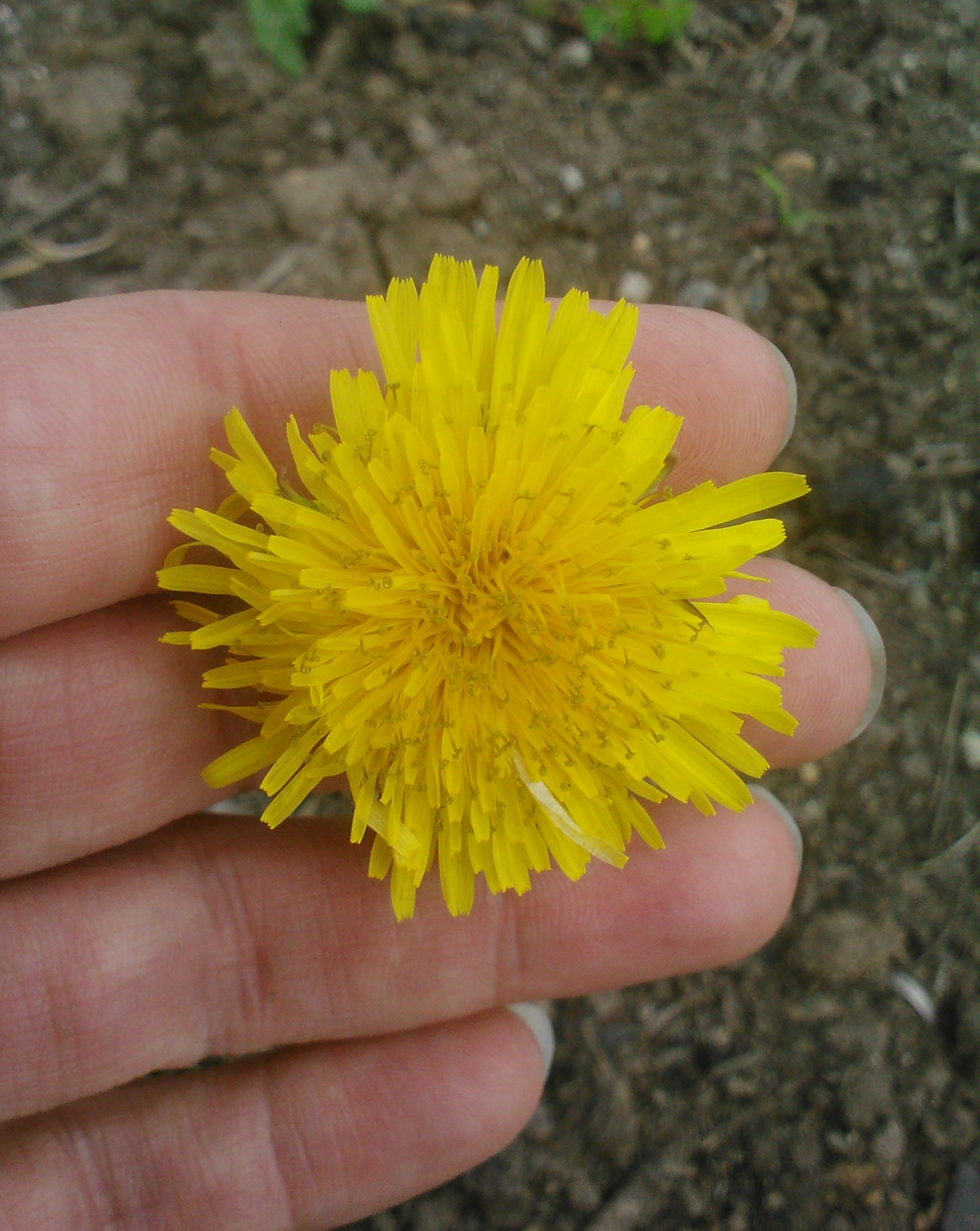
Here’s a nice recipe for the flowers:
Flowery Fritters
Collect dandelion flowers. Make a batter, beating together one cup of milk, one egg and a cup of flour. Heat a few tablespoons of olive oil in a skillet over medium heat. Dip each flower into the batter and put into the hot oil. When golden brown, turn. Remove to paper towels to drain. Garnish with powdered sugar, honey, etc.
Dandelion has several “look-alikes”. Most do not pose a problem since they also happen to be edible. One however, is similar in appearance to dandelion and should be avoided. This is coltsfoot (Tussilago farfara). Although it’s been ingested in various ways for centuries, coltsfoot may have some toxic properties. So make sure you positively identify your dandelions!
* * *
Yellow Wood Sorrel (Oxalis stricta)
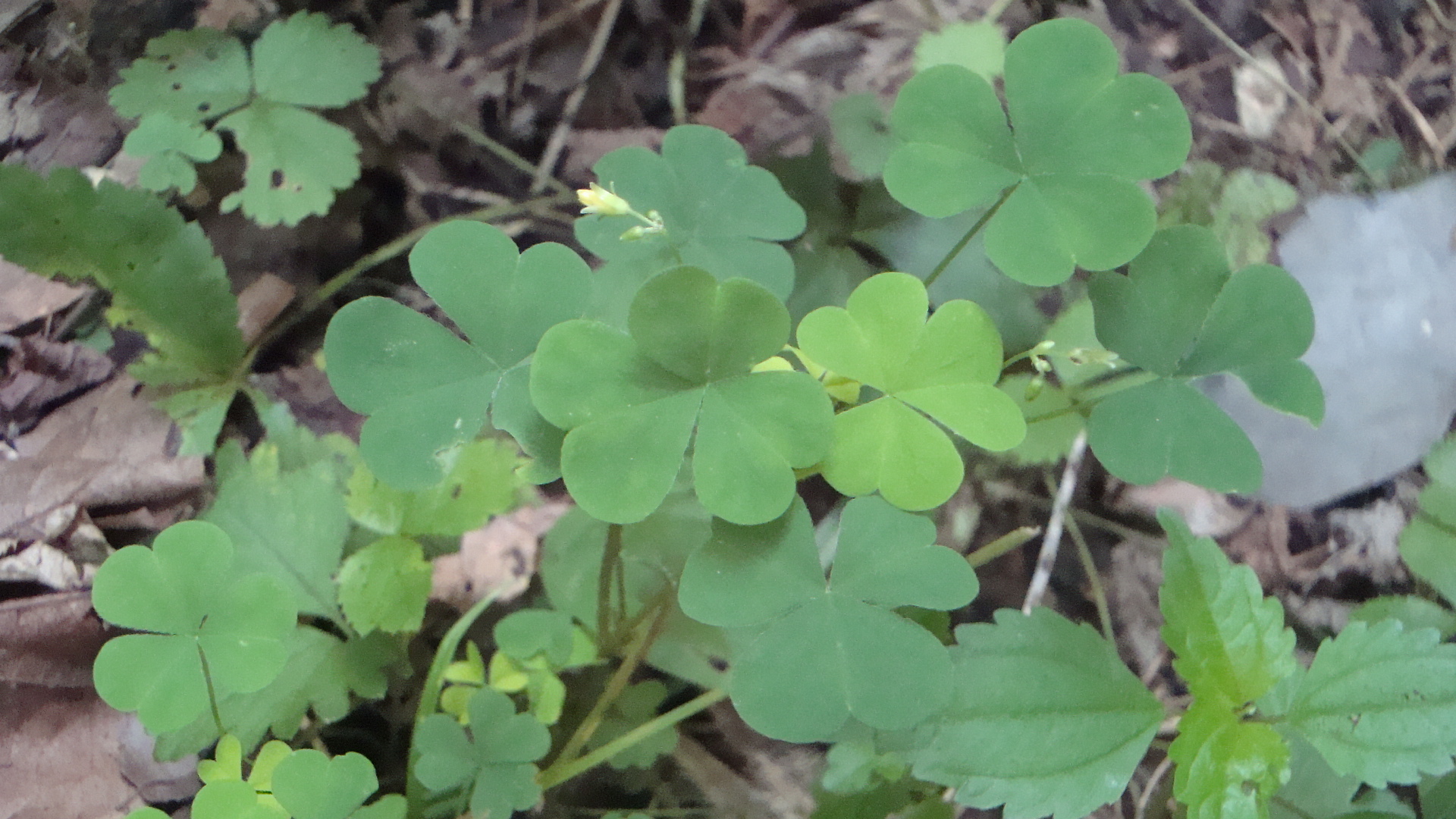
I can always count on this one to elicit reactions of pleasant surprise from just about everyone. Wood sorrel has a tart lemon-like flavor all its own. Nibble it as you find it, or bring home a handful and add to your dinner salad for a bright lemony lift. The leaves, yellow flowers, and seedpods are all edible with a great lemony zing.
If you’ve been told to limit foods like spinach or beets due to a medical condition such as kidney stones, you can put wood sorrel in the same category of oxalic acid-containing foods. Most people can enjoy the plant in moderation.
To identify Wood Sorrel:
Upright or sprawling plant, up to 8″ tall. Leaves on long petioles, palmately compound with 3 heart-shaped leaflets. Each leaflet creased down the middle; edges are untoothed. Flowers are yellow, 5-petaled, radially symmetrical, about 1/2″ across, They bloom spring through summer. Fruits are upright green seedpods, up to 1″ long, on a sharp angle from the stem.
 wildediblesblog